
Defining Osteoarthritis (OA): Allopathic & Ayurvedic Perspectives
Osteoarthritis is the most common form of arthritis, often referred to as "wear-and-tear" of the joints. At Maharshi Charak Ayurvedic Aushdhalya Clinic, we offer a time-tested approach to managing this degenerative condition.
- Allopathic Definition: Osteoarthritis is a degenerative joint disease where the protective cartilage that cushions the ends of the bones wears down over time. This leads to bone-on-bone friction, causing pain, swelling, and reduced mobility.
- Ayurvedic Correlation (Sandhigata Vata) Ayurveda correlates this with Sandhigata Vata. It is a condition where aggravated Vata Dosha settles in the Sandhi (joints). Because Vata has dry (Rooksha) and cold (Sheeta) properties, it consumes the natural lubrication (synovial fluid) in the joints, leading to destruction.
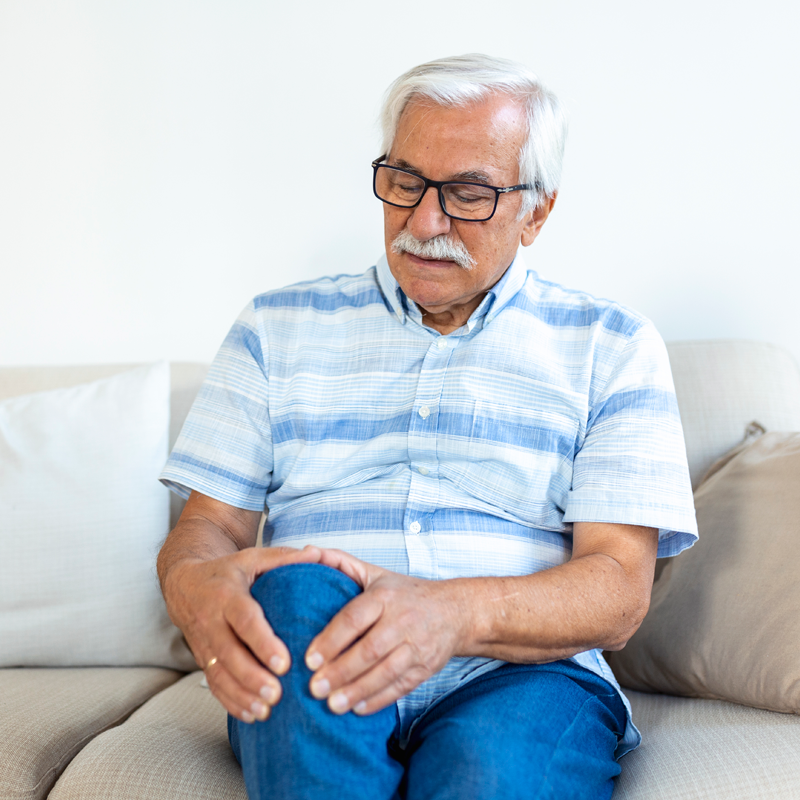
Step-by-Step Treatment Approach Followed at Our Clinic
Pathogenesis of Sandhigata Vata
The development of Osteoarthritis in Ayurveda is a process of "Dhatu Kshaya" (tissue depletion):
- Vata Aggravation: Due to aging, improper diet, or excessive physical strain, Vata Dosha increases in the body.
- Depletion of Shleshaka Kapha: The joints are naturally lubricated by Shleshaka Kapha (synovial fluid). The increased dryness of Vata dries up this fluid.
- Cartilage Erosion: Without lubrication, the Asthi Dhatu (bone tissue) starts to rub together, leading to pain and structural damage.
- Impaired Movement: This results in the characteristic stiffness and "crepitus" (cracking sounds) of Osteoarthritis.
Prevalence & Why It Affects Old Age More
- Prevalence: It is estimated that over 22% to 39% of the Indian population suffers from Osteoarthritis.
- The Connection to Aging: In Ayurveda, human life is divided into three stages. The later stage of life (Old Age/Jara Avastha) is naturally the Vata-dominant period. Since Vata is naturally high during this time, the tissues tend to dry out (Degeneration), making the elderly more susceptible to joint wear and cartilage loss.
Signs and Symptoms of Sandhigata Vata
- Sandhishula (Joint Pain): Pain that worsens with movement and improves with rest.
- Sandhistambha (Stiffness): Difficulty moving the joint, especially after waking up or sitting for long periods.
- Sandhisfutana (Crepitus): A distinct cracking or grinding sound during joint movement.
- Prasarna Akunchana Vedana: Pain during the extension and flexion of limbs.
- Swelling: Mild swelling around the knee or hip joints.
Complications of Untreated Osteoarthritis
If neglected, Sandhigata Vata can lead to:
- Total Mobility Loss: Inability to walk or perform daily tasks.
- Joint Deformity: Visible changes in the shape of knees (bow-legs).
- Baker's Cyst: Accumulation of fluid behind the knee.
- Sleep Disturbances: Chronic pain interfering with rest and mental health.
Our Approach at Maharshi Charak Ayurvedic Aushdhalya Clinic
Our clinic in Sonipat provides a comprehensive "Brimhana" (Nourishing) protocol to restore joint health:
- Prakruti & Vikruti Analysis: We evaluate your body type to understand why your Vata is aggravating.
- Lubrication Therapy (Snehana): We use specialized medicated oils (like Mahanarayan Taila) both internally and externally to restore Shleshaka Kapha.
- Local Treatments: We specialize in Janu Basti (pooling medicated oil on the knee) and Patra Pinda Pottali (herbal bolus massage) to reduce pain and inflammation.
- Customized Medication: Formulations like Shallaki, Ashwagandha, and Guggulu are provided to strengthen the Asthi Dhatu (bones).
- Diet & Exercise Follow-up: We guide patients on "Vata-pacifying" diets and low-impact joint exercises to maintain flexibility.
Make Your Appointment
Make sure to note down the appointment date, time, and location provided by the clinic. Set reminders on your calendar or set an alarm to ensure you are punctual and do not miss your appointment.
-
Customer Service
+91-870-814-1561 -
Clinic Address
Murthal Road, Near Gurukul Village Rewali Sonipat Haryana-131001 -
Opening Hours
Monday - Friday ( 08.00 - 20.00 )
Frequently Asked Questions ?
-
Can Ayurveda "regrow" lost cartilage?
While lost cartilage cannot be fully regrown, Ayurveda can significantly improve the quality of remaining cartilage and increase the production of synovial fluid to stop further degeneration.
-
Why do my knees make cracking sounds?
This is called Sandhisfutana. In Ayurveda, it indicates a lack of Shleshaka Kapha (lubrication) and an increase in Vata (air) inside the joint space.
-
Is walking good for Osteoarthritis?
Gentle walking on a flat surface is beneficial, but excessive walking or climbing stairs should be avoided during acute pain. Our clinic provides specific exercises to strengthen the supporting muscles.
-
How is the treatment at Maharshi Charak Clinic different from painkillers?
Painkillers only mask the sensation of pain. Our protocol at Maharshi Charak Ayurvedic Aushdhalya Clinic works on "Snehana" (oiling) and "Brimhana" (nourishing) to treat the actual cause of the dryness in the joint.
-
Can I avoid knee replacement surgery with Ayurveda?
In Grade 1, 2, and even some Grade 3 cases of Osteoarthritis, Ayurvedic treatment can help patients lead a pain-free life and significantly delay or completely avoid the need for surgery.
Ready to Restore Harmony in Your Mind, Body, and Spirit?
The aim of Ayurvedic medicine is to restore balance and harmony through a holistic approach that encompasses various aspects of an individual's life, herbal remedies, detoxification, meditation, and more.
BOOK AN APPOINTMENT